


Dog scales for home are worth considering when you need to follow a trend regularly: puppies, senior dogs, weight-loss plans, chronic disease monitoring or large dogs whose gradual changes are hard to spot. If your adult dog is healthy, stable and easy to weigh at the clinic, buying a scale is not always necessary.
Weight alone does not tell the full story. It should be interpreted alongside body condition, appetite, activity, muscle condition and clinical context. The goal is to notice useful trends, not to chase a decimal or buy a gadget that ends up in a cupboard.
Important: this article is educational and does not replace veterinary diagnosis or treatment. If your dog loses weight quickly, gains weight despite measured food, vomits, has diarrhea, drinks much more, urinates more or seems unusually tired, contact a veterinary clinic.
Quick summary
| Situation | Is a home scale worth it? | Why |
|---|---|---|
| Healthy stable adult dog | Not always | Clinic weigh-ins may be enough. |
| Puppy | Sometimes | Helps follow growth, vaccination visits and feeding changes. |
| Senior dog | Yes, if changes are likely | Gradual loss may be easier to catch. |
| Weight-loss plan | Yes | Shows whether the trend is improving before making changes blindly. |
| Chronic disease | Yes, if your vet advises it | Gives comparable data between checkups. |
| Large or nervous dog | It depends | A human scale is often impractical; a stable platform can help. |
How to decide before buying
Before looking at models, ask yourself three questions:
- Will the number change what I do? If it will guide portions, a weight-loss plan or a message to your vet, a scale can be useful. If it is only curiosity, it probably is not worth it.
- Can you get comparable weigh-ins elsewhere? Many clinics, groomers and some pet shops have a scale. For a stable adult dog, that may be enough.
- Will your dog step on it calmly? A cheap scale that wobbles, slides or feels too small gives poor readings and makes weighing stressful.
The best scale is not the one with the most features. It is the one that lets you repeat the same calm weigh-in under similar conditions.
When buying a dog scale makes sense
Buying a scale makes sense if you will use it at a clear frequency and the data will guide decisions. That may include a weight-loss program, senior monitoring, endocrine or digestive disease follow-up, or puppy growth.
It can also help if your dog becomes very stressed at the clinic and your veterinarian needs information between visits. Ask how often to weigh and what amount of change matters for your dog.
When you do not need to buy one
A scale usually does not pay off if your adult dog is stable, there is no diet plan, clinic weigh-ins are easy and you know you will not use the scale regularly. In that case, focus on measured meals, activity, controlled treats and body condition checks.
Types of dog scales for home
- Human scale: useful for small dogs if you can weigh yourself, then weigh yourself holding the dog. It is not comfortable for medium, large or restless dogs.
- Baby scale: may work for puppies or very small dogs if the dog is secure and cannot fall.
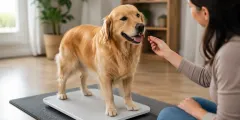
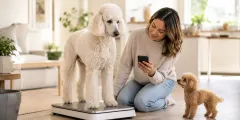
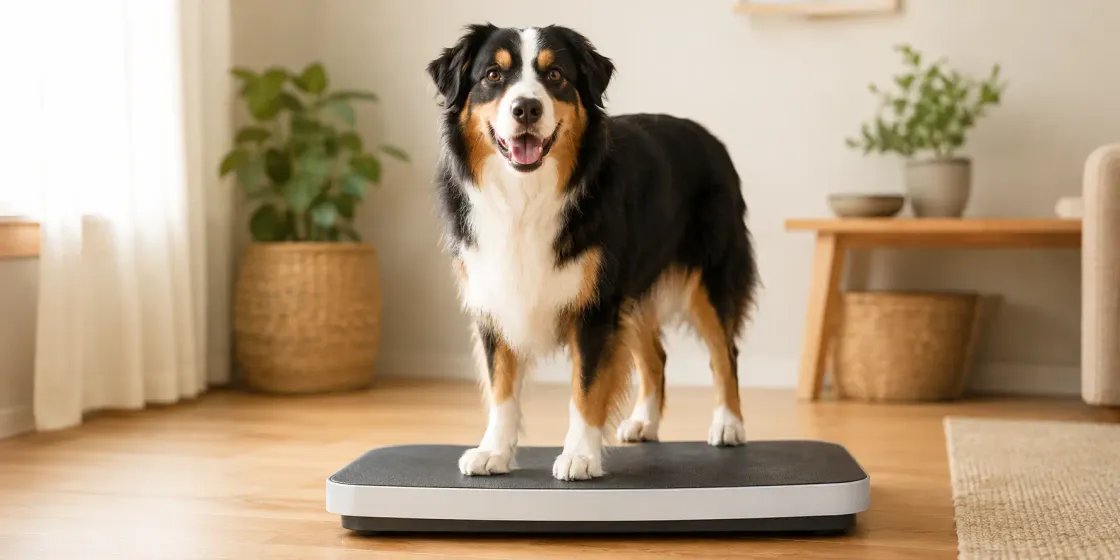
- Veterinary or platform scale: usually best for medium, large or nervous dogs. A wide non-slip surface reduces errors.
- Smart scale: useful if it stores or exports data, but it does not replace interpreting the trend with body condition and veterinary advice.
Further down you’ll find a specific model for each type.
How to weigh a dog at home
- Use the same scale and place it on a flat surface.
- Weigh at a similar time, ideally before a meal or several hours after one.
- Avoid weighing several times a day because it adds noise and anxiety.
- Reward your dog, do not force it and stop if there is fear or pain.
- For small dogs, weigh yourself first and then weigh yourself holding the dog; the difference is an estimate.
- For medium dogs, a low non-slip platform is usually safer.
- For large dogs, use a wide platform or weigh at the clinic if home weighing is stressful.
What to look for before buying a scale
| Feature | Why it matters |
|---|---|
| Platform size | The dog should stand with all four paws without crouching. |
| Maximum capacity | It should comfortably exceed your dog’s actual weight. |
| Non-slip surface | Reduces fear, falls and unstable readings. |
| Easy reading | A visible display avoids moving the dog to see the number. |
| Stability | If it wobbles or vibrates, the dog may trust it less. |
| Enough precision | At home, consistency matters more than extreme precision. |
| Easy cleaning | Useful for mud, hair or accidents. |
| Data storage | Helpful if it exports measurements, although an app or notebook also works. |
Common home weighing mistakes
- Switching scales: small differences may come from the device, not from your dog.
- Weighing right after food, water or exercise: the number can shift without reflecting real fat gain or loss.
- Looking only at weight: a dog may lose muscle without losing many pounds, or build muscle and look heavier.
- Forcing the dog onto the platform: if the dog freezes, shakes or jumps off, the reading is not worth the stress.
- Changing the diet after one reading: confirm the trend and ask your vet before cutting food sharply.
Alternatives if you do not buy a scale
You can weigh your dog at the clinic, at some pet stores with a scale, or use the hold-and-subtract method for a small dog if you can do it safely. For large dogs, a veterinary scale is usually better than improvising at home.
Even without weekly weights, you can record useful signs: appetite, amount of food, treats, activity, waist, ribs, stool, vomiting and energy changes.
How often to weigh a dog
Frequency depends on the case. A stable adult dog may only need clinic checks or monthly weighing. During a weight-loss plan, your veterinarian may suggest weekly or every-other-week checks. Puppies, seniors and dogs with chronic diseases need a schedule based on risk.
For more context, see ideal dog weight by breed, dog weight control, how often to weigh a dog and when to start weighing a puppy.
What to record at home
- Date and approximate time.
- Weight and scale used.
- Food amount, treats and diet changes.
- Activity, appetite, thirst, stool and vomiting if present.
- Body condition if your veterinarian has shown you how to assess it.
- Medication, reports and clinic recommendations.
An organized history helps the veterinarian see patterns instead of scattered memories. In Dogtorcito, you can save each weigh-in with date, context, food, activity, body condition and veterinary notes so you can review the trend without obsessing over one measurement.
When to call your vet
Contact your clinic if you notice rapid weight loss, steady weight gain despite measured meals, a swollen belly, drinking much more, vomiting, diarrhoea, limping, low energy or reluctance to move. With puppies, senior dogs and dogs with chronic disease, do not wait until the change is obvious: a well-kept weight curve is useful because it helps you ask earlier.
If the hard part is that your dog is large, unsure or steps off the platform, see how to weigh a large dog at home without stress.
How Dogtorcito helps
Dogtorcito works as your pet health notebook: it tracks weight, notes, medication, documents, reminders and important changes. That gives you a clear timeline to bring to the consultation and share with the clinic when needed.
Recommended scales
These are the scales that match this guide, depending on your dog’s size. Treat them as examples of format, not as a must-buy list.
Transparency note: the links below are affiliate links. Buying through them helps keep this project going; the price is the same for you.
These links currently point to Amazon Spain. If you are in the US, UK or another market, check availability, returns, warranty and equivalent models in your local marketplace.

Gram-level precision for newborn puppies, toy dogs and kittens. The tray keeps them from wobbling during weigh-ins.


Padded non-slip platform with 10 g precision. The right size for small and medium dogs.


Non-slip mat and kg/lb/oz modes. The budget option for weighing large dogs at home.


Very thin and light, with a paw-friendly surface. Easy to store and easy for the dog to step onto.

FAQ
How precise does a home dog scale need to be?
For home monitoring, consistency usually matters more than extreme precision. Use the same scale and look at the trend across several measurements.
Can I weigh a large dog on a human scale?
Usually not safely or accurately. If you cannot hold the dog without risk, use a platform scale or weigh at the clinic.
Can weighing my dog become obsessive?
Yes. Set a frequency, avoid unnecessary daily weigh-ins and review changes with your veterinarian.
What should I do if my dog’s weight changes suddenly?
Repeat the measurement calmly once. If the change is confirmed or there are symptoms, contact your veterinarian. Do not make sudden diet changes without guidance.
References
Check your pet's weight
Use Dogtorcito's free calculator to compare current weight with breed and sex ranges, then keep tracking the trend.
Open weight calculator