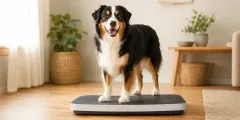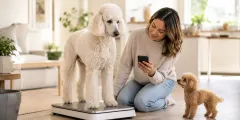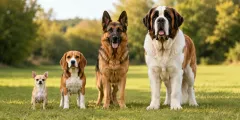



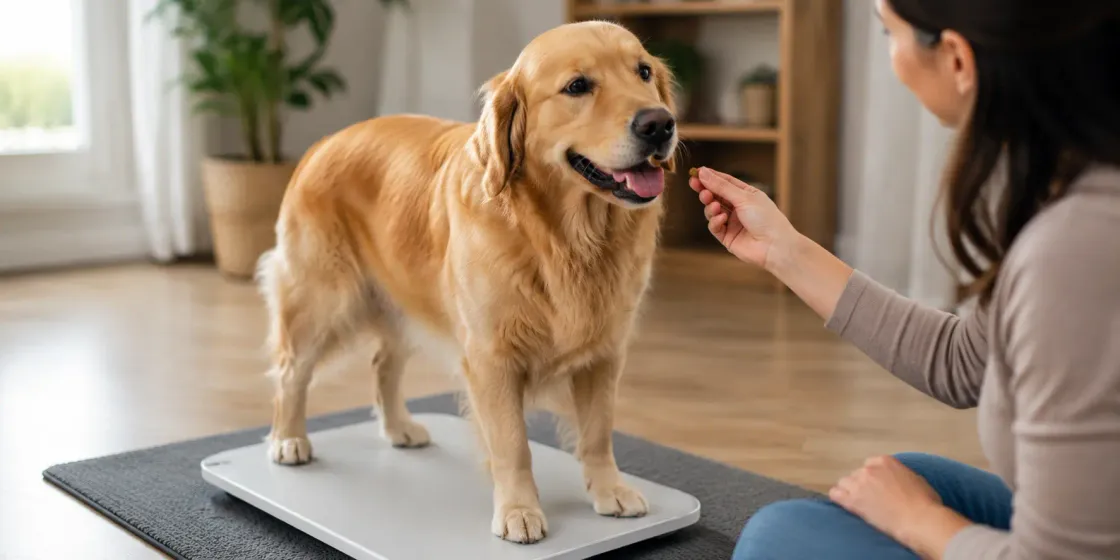
Weighing a large dog at home can feel difficult, but with a stable surface, rewards and a repeatable method it becomes easier. The goal is not a perfect number every day, but a reliable trend that helps spot weight gain or loss early.
Important: this article is educational and does not replace veterinary diagnosis or treatment. If your dog loses or gains weight quickly, has pain, limping, tiredness or appetite changes, contact a veterinary clinic.
Quick summary
| Situation | Why it matters | Next step |
|---|---|---|
| Does not fit on a normal scale | The method must match size, mobility and temperament. | Use a wide platform, vet clinic scale or safe indirect weighing. |
| Gets nervous | Stress can make the dog avoid the scale. | Train short approaches with rewards. |
| Weight changes appear | The trend matters more than one number. | Record date, weight, method and context. |
Choose the method before calling your dog over
A large dog can tell when the whole setup is being improvised. Before asking for a step up, have the spot ready, the reward in reach and a clear way off the scale. That keeps the weigh-in short and makes it easier to repeat the same way next month.
- If your dog is steady and fits standing up, try a wide platform.
- If your dog freezes, start with sniffing and touching the surface only.
- If there is arthritis, back pain or old-age stiffness, use the clinic scale.
- If the number affects medication, skip guesswork and ask for a reliable measurement.
Before you start
- Choose a flat, stable surface.
- Place a non-slip mat if the floor is slippery.
- Prepare small rewards.
- Do it when the dog is calm, not right after eating or running.
- Do not force a dog with pain, fear or mobility problems.
Ways to weigh a large dog
Option 1: veterinary or platform scale
This is usually the easiest option for large dogs. The platform should be wide, stable and non-slip. If you buy a scale for home, prioritize safety and repeatability over decimal precision.
Option 2: weigh at the clinic
Many clinics allow quick weigh-ins without a full appointment. This is a good option if your dog does not fit on a home scale, if you need a precise measurement or if you want to use the same equipment every time.
Option 3: indirect weighing
For medium dogs, you may be able to weigh yourself, then weigh yourself holding the dog and subtract the difference. For large dogs, only do this if you can lift the dog safely. If there is any risk of falling, pain or injury, do not do it.
How accurate does it need to be?
For routine tracking, using the same scale at a similar time of day is usually more useful than chasing decimal-level precision. A dog weighed after dinner may look slightly heavier than the same dog weighed before breakfast, even when nothing meaningful has changed.
Accuracy matters more when weight affects a drug dose, anesthesia planning, a weight-loss diet or follow-up for illness. In those cases, confirm the number with the veterinary team or use the clinic scale. At home, watch the trend: several readings moving in the same direction matter more than one small wobble.
How to train scale confidence without stress
- Let the dog sniff the scale while it is off.
- Reward approaching it.
- Reward one paw on it.
- Reward two paws on it.
- Ask the dog to step on and off without measuring.
- Keep weigh-ins very short.
- Stop before the dog gets overwhelmed.
Common mistakes when weighing a large dog
- Weighing every day without a veterinary reason.
- Comparing measurements from different scales.
- Forcing a fearful or painful dog.
- Weighing on a slippery surface.
- Obsessing over small variations.
- Not recording context: food, exercise, medication or illness.
A routine that tends to work
Pick a boring moment, such as before the evening walk or before dinner, when your dog is interested in rewards but not buzzing from being outside. Put the scale in the same place, use one simple cue such as “step up” and save the best treat for stepping off calmly.
In multi-dog homes, weigh one dog at a time. The dog waiting behind can rush the process, nudge the first dog or turn the scale into a game. For very large dogs, it often helps to have one person guide with food while another reads the number without crowding the dog.
When it is better to weigh at the clinic
- If the dog is too heavy to handle safely.
- If there is pain, arthritis, limping or intense fear.
- If you need a precise measurement for medication.
- If there is rapid weight loss or gain.
- If you are following a veterinary plan.
What the veterinarian may check
- Body condition, muscle mass and joints.
- Whether the change matches diet, exercise or disease.
- Whether blood work is needed for unexplained loss.
- Target weight and safe rate of change.
For more context, also see dog weight control, ideal weight by breed and how often to weigh.
What to record at home
- Date, weight and method used.
- Scale or clinic where the measurement was taken.
- Food, exercise, treats and diet changes.
- Medication, recent illness, limping or pain.
- BCS or body condition note if your vet has shown you how to assess it.
If you are thinking about buying a platform, read when a dog scale at home is worth it before choosing one. It helps separate “this would genuinely help” from “a quick clinic weigh-in once a month is enough.”
How Dogtorcito helps
In Dogtorcito you can record each weigh-in with date, method, scale, context, food, exercise, medication and notes. This helps your veterinarian see the trend without relying on scattered memories.
Recommended scales
These are the scales that match this guide, depending on your dog’s size:
Transparency note: the links below are affiliate links. Buying through them helps keep this project going; the price is the same for you.

Non-slip mat and kg/lb/oz modes. The budget option for weighing large dogs at home.


Very thin and light, with a paw-friendly surface. Easy to store and easy for the dog to step onto.

FAQ
How often should I weigh my dog?
For stable adult dogs, monthly is often enough. Veterinary plans may need weekly, every two weeks or clinic-specific checks.
Can I use a human scale?
Only if it is safe and the dog stays still. Large dogs usually need a wider platform or a clinic scale.
What if I cannot weigh my dog at home?
That is fine. Many clinics allow quick weigh-ins. Repeating the same method and saving the context matters most.
References
Check your pet's weight
Use Dogtorcito's free calculator to compare current weight with breed and sex ranges, then keep tracking the trend.
Open weight calculator