



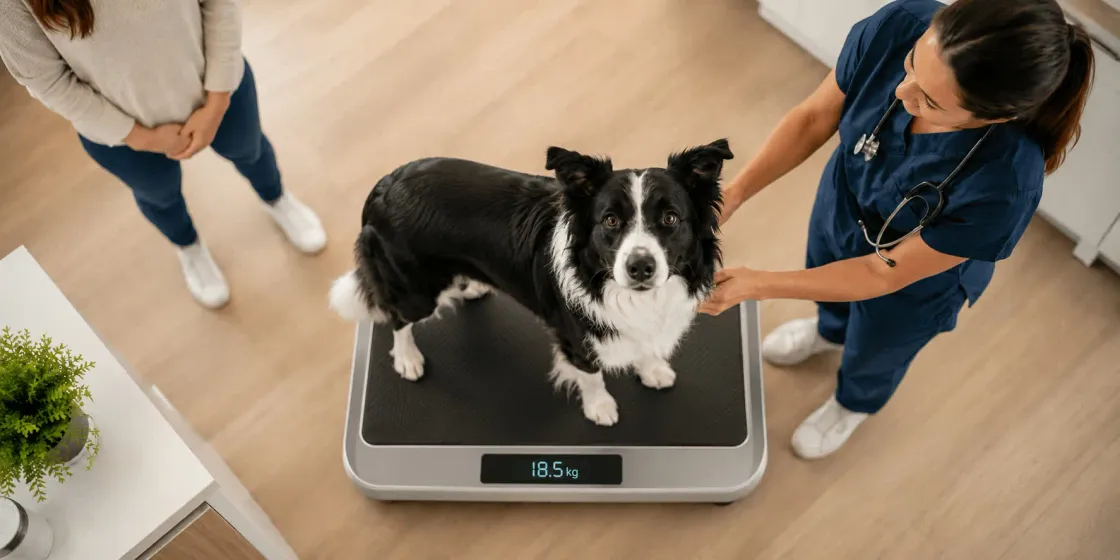
Is your dog just a little chunky, or are they already overweight? That distinction matters, because healthy weight loss is not as simple as cutting a scoop of food. You need to look at body shape, breed, age, treats, exercise, neutering status and any medical history.
This guide shows you how to check your dog at home, what warning signs to watch for, and how to keep a weight record your vet can actually use.
Overweight dogs: why it is not just cosmetic
Canine obesity has risen sharply over the last decade. According to several European studies, between 40 and 55 % of adult dogs are overweight or obese. Yet many owners don’t notice because the change happens gradually.
The real risks of excess weight are significant:
- Joint damage: Extra load accelerates wear and tear, promoting osteoarthritis and hip dysplasia.
- Cardiovascular disease: The heart works harder, which can lead to hypertension or heart failure.
- Diabetes mellitus: Excess fat disrupts insulin sensitivity, especially in predisposed breeds.
- Breathing difficulties: Abdominal fat compresses the diaphragm and reduces lung capacity.
- Shorter lifespan: Studies show that dogs at an optimal weight live, on average, 1.5 to 2 years longer than obese dogs.
Being underweight is equally dangerous: it can indicate parasites, gastrointestinal disease, kidney problems, or simply inadequate nutrition.
How to tell if your dog is overweight
The scales help, but they do not tell the whole story. A muscular dog may sit above the breed average and still be in good condition; another dog may be inside the range but carrying too much fat. Use three clues together.
1. Ribs, waist and side profile
Check your dog while they are standing:
- Ribs: you should feel them with your fingers without digging in.
- Waist: from above, the body should narrow behind the ribs.
- Side profile: the belly should tuck up slightly toward the groin.
If the ribs are hard to feel, the waist has disappeared or the belly hangs low, overweight is a real possibility.
2. Body Condition Score (BCS)
The BCS scale runs from 1 to 9. A dog in ideal condition usually scores 4 or 5. A score of 6-7 means excess body condition; 8-9 is obesity.
BCS is especially useful for long-coated dogs, mixed breeds and dogs whose build does not match a neat chart. Ask your vet team to show you once in the clinic; after that, the home check becomes much easier.
3. Breed target weight
Breed ranges are a starting point. An adult Labrador often sits around 25-35 kg; a Beagle, 9-11 kg. Moving more than 10-15 % away from the expected range, or gaining several kilos without a clear reason, is worth a veterinary check.
For breed comparisons, see the full guide to ideal weight for dogs by breed.
What to do if your dog is overweight
Do not start with a crash diet. In dogs, good weight loss means losing fat gradually, preserving muscle and avoiding nutritional gaps. A sensible plan usually has four parts:
- Confirm the starting point: current weight, BCS, daily food, treats, table scraps and activity level.
- Set a realistic target: ideally with your vet, especially if your dog has obesity, arthritis, diabetes, breathing problems or is senior.
- Adjust food without guessing: weigh meals with kitchen scales and count treats inside the daily total.
- Increase movement carefully: steadier walks often beat sudden hard exercise, especially for older, flat-faced or limping dogs.
If your vet recommends a food change, transition gradually and read our guide to dog food by body condition.
What not to do
- Do not halve the food without supervision. You can create severe hunger, muscle loss or nutrient gaps.
- Do not fix it with intense exercise overnight. Extra weight already puts more load on joints.
- Do not ignore small treats. Cheese, ham, toast crusts and leftovers can explain more than the kibble.
- Do not use veterinary diets casually. Some are designed for specific situations and need follow-up.
- Do not normalise difficult breathing. In French Bulldogs, Pugs and other brachycephalic dogs, excess weight worsens heat tolerance, panting and airway risk.
How often to weigh and what to record
One annual weigh-in at the vet is not enough. Weight can shift after neutering, an injury, a food change, less walking in hot weather or ageing.
A practical rhythm is:
- Healthy adult dog: once a month.
- Dog on a supervised weight-loss plan: every 1-2 weeks, if your vet agrees.
- Puppy, senior or dog with disease: follow the schedule your clinic recommends.
Record the date, weight, daily ration, treats, exercise, BCS and any signs such as limping, coughing, drinking more, moving less, vomiting or diarrhoea.
How Dogtorcito helps you keep the thread
Dogtorcito turns “I think they’ve put on weight” into a dated curve. You can log each weigh-in, add notes about food or activity, note when the next weigh-in is due and show the trend at the clinic. If you live with several dogs, each one keeps a separate record.
The goal is not chasing one perfect number. It is spotting the trend before excess weight becomes pain, fatigue or disease. With a simple body check, regular weigh-ins and veterinary guidance, you can adjust early and with real data.
Go deeper on dog weight management
- Ideal weight for dogs by breed: a guide by size and age
- When to start weighing your puppy? A week-by-week guide
- How often should you weigh an adult dog?
- Dog scales for home: when they are worth it
- Best dog food by body condition: a guide with recommendations
Ready to start tracking? Try Dogtorcito and log your dog’s first weight in under a minute.
References
Check your pet's weight
Use Dogtorcito's free calculator to compare current weight with breed and sex ranges, then keep tracking the trend.
Open weight calculator