


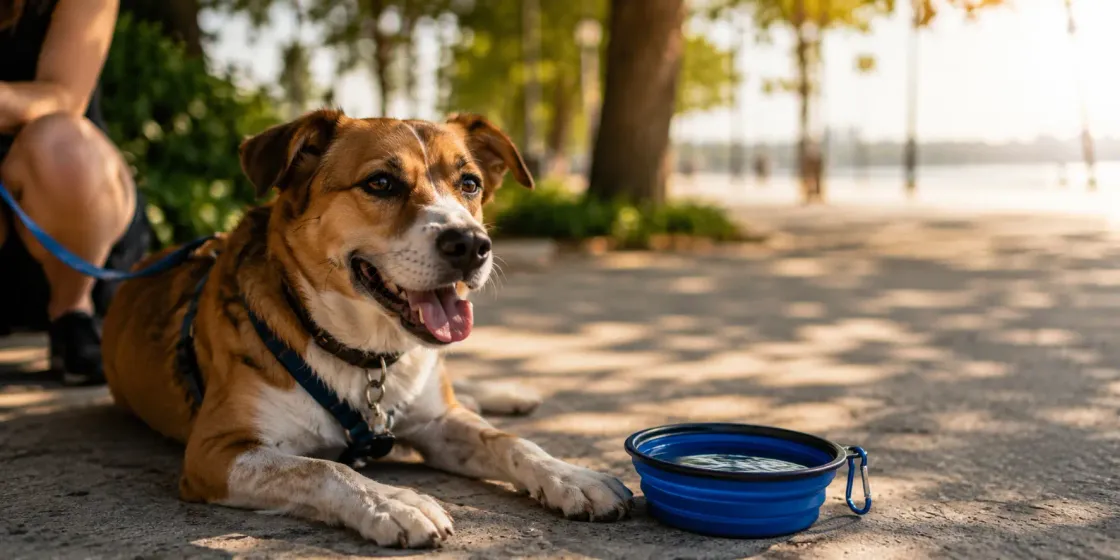
Summer changes a dog’s routine. Walks may need to be shorter, pavement stores heat, humidity makes cooling harder and outdoor plans that feel normal for humans can become risky for dogs.
The goal is not to stop going outside, but to adapt timing, distance, surfaces and intensity. A dog can overheat during a walk, on a patio, in a car, at the beach without shade or after too much play in humid weather.
Important: This article is educational and does not replace veterinary advice. If your dog has extreme panting, weakness, vomiting, diarrhea, wobbliness, confusion, pale, grey or blue gums or collapse, contact an emergency veterinarian.
Quick summary: caring for dogs in summer
| Situation | What to do |
|---|---|
| Daily walk | Go early or late, lower intensity and choose shade |
| Hot pavement | Touch the ground with the back of your hand; if it burns, avoid it |
| Higher-risk dog | Reduce exercise further and act earlier |
| Car travel | Never leave your dog inside, even with windows cracked |
| Odd panting, weakness or vomiting | Stop, cool safely and call the vet |
Match the plan to your local summer
Summer risk looks different in Arizona, Florida, London or Toronto. In hot, dry areas the pavement and parked cars can become dangerous very fast; in humid places, a dog may struggle to cool down even when the air temperature looks less dramatic. In the UK, conservatories, flats under the roof and cars parked for “just a minute” are common traps; in much of the US, the heat index and sun-exposed sidewalks deserve as much attention as the forecast high.
On heat-advisory days, change the goal: quick toilet walk, real shade, water and back indoors. If you share your home with cats too, read heatstroke in cats; carriers, sunny windows and poorly ventilated rooms can become risky before anyone notices.
Which dogs are at higher heat risk?
Any dog can struggle in heat, but some have less safety margin:
- Brachycephalic dogs, such as bulldogs, pugs and boxers.
- Puppies and senior dogs.
- Dogs with overweight or obesity.
- Dogs with heart or breathing disease.
- Dogs with very dense or dark coats.
- Dogs that are not used to exercise.
- Nervous dogs that keep playing even when tired.
If the walk feels hard for you, it may already be too much for your dog.
Safer summer walking times
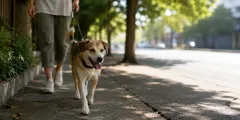
The safest walking windows are usually early morning and late evening, once the ground has cooled. Avoid the middle of the day, especially when humidity is high, wind is low or urban surfaces have been in direct sun.
If your dog needs a toilet break during a hot period, make it short and functional: shade, little distance, no intense play and back home.
How to adapt walks on hot days
Before leaving:
- Bring enough water for your dog.
- Choose shaded routes and cooler surfaces.
- Avoid running, cycling, intense ball games or explosive exercise.
- Check whether your dog is already panting or tired before starting.
- Plan a route you can shorten.
During the walk:
- Take frequent breaks.
- Allow calm sniffing instead of fast marching.
- Turn back if your dog slows down, seeks shade or lies down.
- Do not force your dog to continue if they resist.
Afterwards:
- Offer water.
- Let your dog rest somewhere cool.
- Check paw pads, limping, irritation or unusual tiredness.
For year-round routine planning, see how to walk your dog safely.
Heat warning signs
Watch for:
- Very heavy panting that does not settle with rest.
- Thick drool.
- Very red, pale, grey or blue gums.
- Weakness, wobbliness or clumsiness.
- Vomiting or diarrhea.
- Confusion or slow response.
- Collapse or seizures.
If you see these signs, do not keep walking home. Move to shade or a cool place, start cooling with cool water, improve airflow and call an emergency vet.
If signs suggest heatstroke, also review heatstroke in dogs: symptoms and what to do.
What to do if overheating is possible
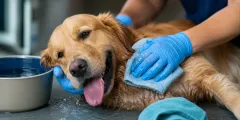
- Move your dog to shade, a cool room or air conditioning.
- Wet the body with cool water, not ice water.
- Use airflow from a fan, open windows or air conditioning.
- Offer small amounts of water only if your dog is alert and can swallow normally.
- Call a veterinary clinic while cooling.
- Do not wait at home if there was weakness, vomiting, collapse or disorientation.
Cooling helps, but heatstroke can cause internal damage even when the dog seems better.
What not to do
- Do not leave your dog in a car.
- Do not do intense exercise in hot hours.
- Do not use a muzzle that prevents proper panting.
- Do not force water if your dog is weak, vomiting or confused.
- Do not use ice baths unless a vet specifically instructs you.
- Do not cover your dog with heavy soaked towels.
- Do not keep the walk going just because it is your usual route.
- Do not ignore limping or paw licking after hot ground.
Hot pavement, sand and patios
Hot surfaces can burn paw pads and add heat stress from below while your dog is trying to cool by panting. Touch the ground with the back of your hand for several seconds. If it is uncomfortable for you, choose grass, dirt, shade or a shorter route.
On hot days, prioritize:
- Grass.
- Dirt paths.
- Shade.
- Short routes.
- Rest breaks.
- Boots only if your dog already tolerates them and they do not add stress.
For more detail, see how to protect your dog’s paws from hot pavement.
Summer plans with your dog
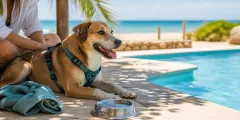
Before taking your dog to the beach, mountains, a patio or a trip, ask:
- Will there be enough shade?
- Will I have water for my dog?
- Can my dog rest away from constant stimulation?
- Are there hot surfaces?
- Do I know where the nearest veterinary clinic is?
- Is my dog higher risk because of age, breed, weight or disease?
A plan that feels pleasant for humans is not always comfortable for dogs. Often, the safest option is an early walk and rest at home during the hardest hours.
What to record in Dogtorcito
Save the walk time, route, approximate temperature, panting level, fatigue, water intake, paw irritation, vomiting, diarrhea, weakness and any veterinary recommendations.
FAQ
What is the best time to walk a dog in summer?
Usually early morning or late evening. Still check humidity, ground temperature and your dog’s tolerance.
Is carrying water enough?
No. Water helps, but it does not cancel the risks of hot pavement, intense exercise or high-risk dogs.
Can I wet my dog before going out?
It may help some dogs, but it does not make an intense walk at a dangerous time safe. Timing, shade, water and low intensity matter most.
When should I call an emergency vet?
Call for extreme panting, weakness, vomiting, diarrhea, wobbliness, confusion, collapse, seizures or pale, grey or blue gums.
References
- Cornell University College of Veterinary Medicine - Heatstroke: A medical emergency
- Merck Veterinary Manual - Protecting Pets During Hot Summer Months
- Merck Veterinary Manual - What to Do in a Dog or Cat Emergency
- Royal Veterinary College - Heatstroke in dogs: cool first, transport second