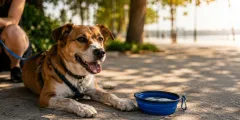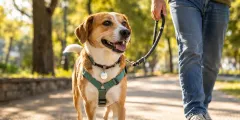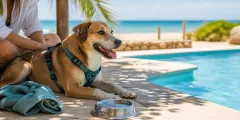



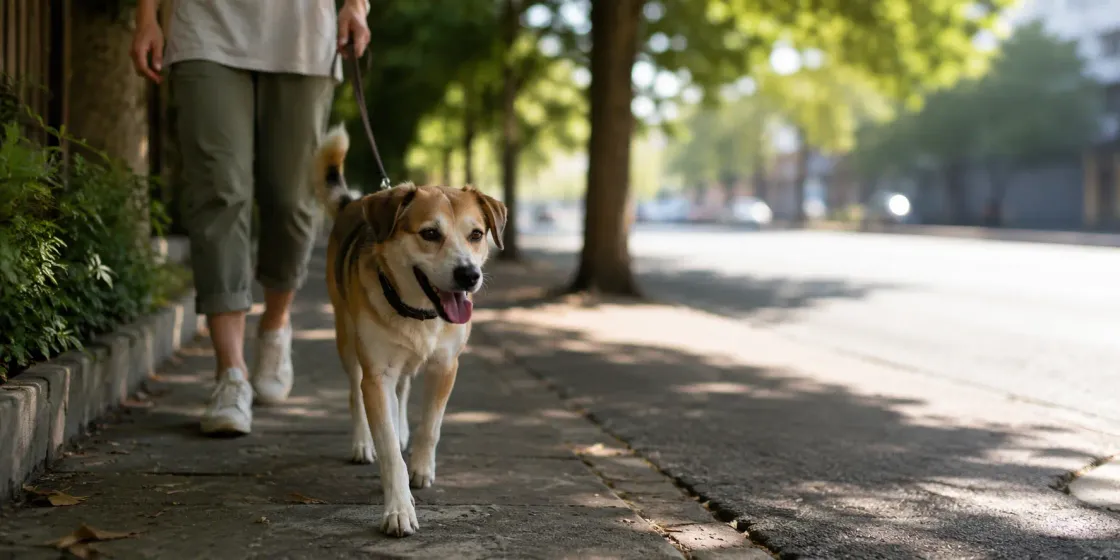
Hot pavement can damage your dog’s paw pads faster than it seems. In summer, a street that feels only warm to you may have been storing heat for hours, especially if it is dark, sunny and windless.
Paw pads are protective, but they are not invulnerable. They can become irritated, cracked or burned, and pain may appear during the walk or once you get home.
Important: This article is educational and does not replace veterinary advice. If your dog limps, has blisters, open wounds, bleeding, intense pain or refuses to bear weight, contact your veterinarian or a veterinary emergency service.
Quick summary: paw protection in summer
| Risk | What to do |
|---|---|
| Pavement in direct sun | Avoid it and choose shade, grass or dirt |
| Ground that feels hot or uncomfortable to the back of your hand | It is not safe for paw pads |
| Limping or heavy paw licking | Stop the walk and check the paws |
| Red, open or blistered pads | Call your veterinarian |
| You cannot avoid going out | Keep it short, shaded, with water and low intensity |
Why pavement becomes dangerous
Asphalt and some tiles store heat. Even when the air does not feel extreme, the surface can be much hotter than the environment.
Risk rises when:
- The street is in direct sun.
- The pavement is dark.
- There is little shade.
- The walk happens at midday or in the afternoon.
- Your dog walks slowly over hot surfaces.
- Your dog is already tired or panting heavily.
Hot ground does not only damage paws: it also adds heat stress from below while your dog is trying to cool by panting. This can increase the risk of overheating or heatstroke.
The ground test
Touch the ground with the back of your hand for several seconds.
If it burns, makes you pull away or feels clearly uncomfortable, do not make your dog walk there. Choose shade, grass, dirt or a different time.
This test is only a guide: if you are unsure, choose the cooler route.
Safer times and surfaces
To protect paws:
- Walk early in the morning.
- Use the end of the day only if the ground has cooled.
- Prioritize grass, compact dirt, shaded paths and cool sidewalks.
- Reduce distance when you cannot avoid urban routes.
- Carry water and take breaks.
- Avoid hot sand, sunny stone terraces and metal surfaces.
Remember that pavement can stay hot even after the air temperature has started to drop.
If the walk is part of an exercise routine, reduce intensity during hot weeks. You can also review how to walk your dog safely.
Signs of paw irritation or burns
Check the paws if your dog:
- Limps during or after the walk.
- Sits down and refuses to continue.
- Lifts paws in turns.
- Licks or chews the pads.
- Avoids bearing weight.
- Has red, dark, cracked, swollen, blistered or bleeding pads.
Some dogs keep walking despite pain, so check after the walk instead of waiting for obvious complaints.
What to do if you suspect a burn
If irritation looks mild:
- Stop the walk.
- Move your dog to a cool place.
- Avoid more hot surfaces.
- Gently rinse with cool water if there is dirt.
- Avoid persistent licking, because it can worsen the irritation.
- Call your veterinarian if there is pain, limping or uncertainty.
Call your veterinarian if there are blisters, open wounds, bleeding, marked limping, intense pain or refusal to bear weight. Do not apply human creams, alcohol, essential oils or irritating products without veterinary guidance.
Boots, waxes and protection
Boots can help if your dog tolerates them and they fit well, but they can also rub, overheat or cause stress. Before using them in hot weather:
- Introduce them at home.
- Try very short walks.
- Check for rubbing afterward.
- Make sure they do not add too much heat.
- Do not use them as an excuse to walk at dangerous times.
Paw balms may help with friction or dryness, but they do not make burning pavement safe. If the ground burns, change time, route or surface.
Higher-risk dogs
Be more careful with:
- Puppies, because routines and tolerance are still changing.
- Senior dogs, who may have joint pain or lower stamina.
- Overweight dogs, because more weight loads the paws.
- Brachycephalic dogs, who tolerate heat less well.
- Dogs with heart, breathing or endocrine disease.
- Dogs with already cracked, injured or irritated pads.
For weight-related exercise planning, see dog weight control.
Checklist before going out
Before an urban summer walk:
- Touch the ground.
- Check whether the route has real shade.
- Carry water.
- Reduce distance.
- Avoid running or ball play on pavement.
- Know where you can turn back.
- Check paws when you return.
If you must cross a hot area, do it quickly, use the shadiest part and avoid stopping on the surface.
What to record in Dogtorcito
Save the walk time, route, surface, approximate temperature, limping, licking, paw photos, products used and recovery over the next few days.
FAQ
How to tell if the ground is too hot for your dog
Touch it with the back of your hand for several seconds. If it is uncomfortable for you, avoid it for your dog.
Do dog boots solve the problem?
They can help when fitted and introduced properly, but they do not replace safe timing and shaded routes.
Can I use human moisturizer on paw pads?
Not without checking. Some human products are irritating or unsafe if licked. Use veterinary products or ask your clinic.
When should I call the vet?
Call for blisters, wounds, bleeding, marked limping, pain, swelling, discharge, bad smell or refusal to bear weight.